
The RINSE Project
Pyrolysis: Malaria protection without pollution
The Problem
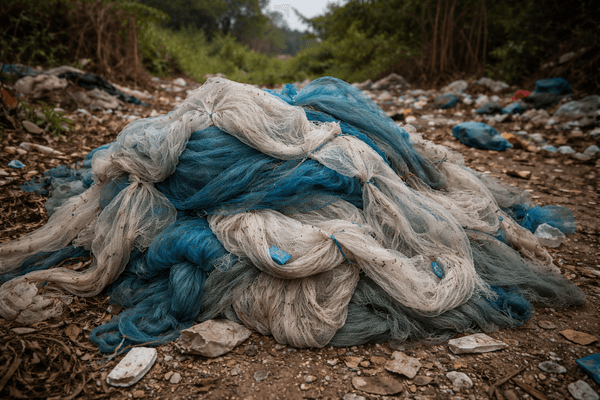
More than 3.5 billion Long-Lasting Insecticidal Nets (LLINs) have been distributed worldwide these last decades, with ~400 million added each year. This intervention has saved hundreds of millions of lives and must continue. This breakthrough traces back to Dr. Pierre Carnevale, who pioneered the first field trials of insecticide-treated mosquito nets in 1983, laying the foundation for what became one of the most effective malaria prevention tools in history.
However, all LLINs and their packaging, are made of non-biodegradable plastics (polyester, polyethylene, polypropylene) and impregnated with insecticides pyrethrinoides. After 1–2 years of use, nets are torn, removed and discarded in close environment. These “end-of-life” nets create a massive and growing crisis: plastic pollution, micro- and nano-plastic contamination toxic for fauna and human health, chemical exposure, and potential insecticide resistance pressure.
Many current “solutions” focus on burning with domestic waste in landfill in open space, this must be strictly forbiden as it produces well-known toxid vapour; burying wich moves plastic and insecticide from “on” to “in” the earth with impact on the fauna; or crushing, repurposing nets into new objects. While often well-intentioned, and visually appealing, these approaches simply move the problem from site A to site B. Plastic remains — now fragmented, in microplastics and nanoplastics which are dispersed, and more likely to enter soil, water, air, and human bodies with impact of great concern.
Cleaning a warehouse does not equal solving pollution.
If the objective were merely to make waste disappear from sight, one could dump it into the ocean — problem solved at local level but increasing at Global level…
Helping is noble. Helping without creating new long-term harm is essential. Any end-of-life solution must therefore be assessed not only by what it removes today, but by what it leaves behind tomorrow and for other people.
The Solution
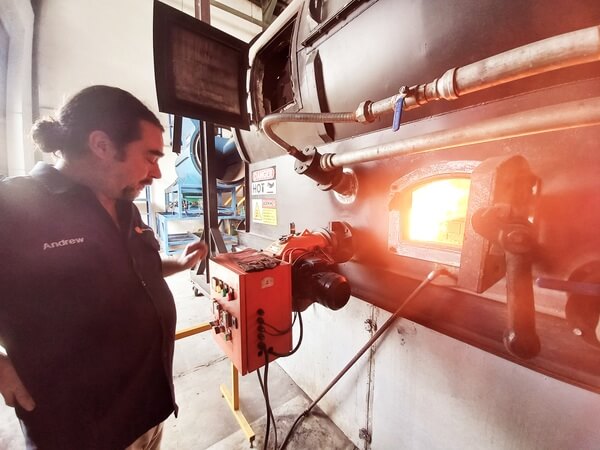
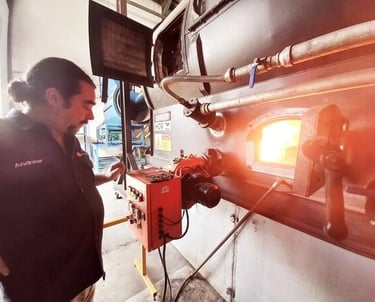
The RINSE Project applies controlled, high-performance pyrolysis to address the end-of-life challenge of insecticide-treated mosquito nets and their plastic packaging.
What makes RINSE different is how the technology is engineered and deployed: under controlled conditions, with verified yields, controlled emissions, and complete destruction of both plastic polymers and insecticide residues
With the support of WHO TDR, our team conducted the first-ever pyrolysis of Royal Sentry® LLINs made of polyethylene and impregnated with alpha-cypermethrin. A dedicated setup was used, applying standard industrial plastic pyrolysis protocols. GC–MS analysis performed by Universities showed an 81.3% yield of high-quality fuel, 5.65% oil residue, and 5% carbon residue, with no detectable polyethylene or insecticide remaining (GC et al., 2025).
Key operational advantages:
Mobile units (up to 1 ton capacity) can be prepared and mounted on open-bed vehicles and deployed directly in villages, drastically reducing collection and transport constraints
Fixed units (up to 5 tons capacity) can be operated in centralized facilities where return schemes are in place (e.g. old net exchanged for a new one)
The recovered fuel can be used locally to power engines and equipment, closing the loop on-site
Why choose RINSE
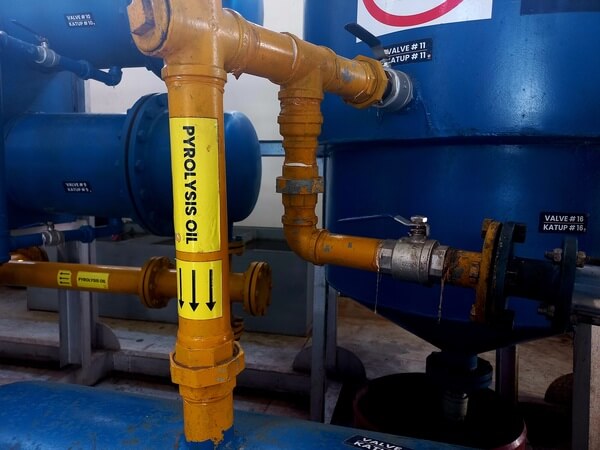
The challenge of plastic pollution is often approached with good intentions — but not all solutions actually solve the problem.
Current methods such as crushing, burning, burying, or basic upcycling do not eliminate plastic. They simply move it from one location or form to another, while accelerating the formation of micro- and nanoplastics, which are increasingly linked to long-term risks for ecosystems and human health.
RINSE starts from a different premise: eliminating plastic and insecticide, not displacing them as they create Ecological and human health considerations.
What RINSE delivers:
A proven, available technology with evidence-based results, and clear pathways for technology transfer and in-situ training for capacity building
Complete elimination of plastic and insecticide — not relocation
No toxic emissions, verified under controlled conditions
Reduced pressure on insecticide resistance by removing residual active compounds from the environment
Local job creation and income generation, replacing disposal costs with economic value
A self-sustaining circular economy model, where waste is converted into energy
Pyrolysis itself is neither secret nor new.
What is rare is a system that combines performance, safety, mobility, and scalability under real-world conditions.
RINSE is not a concept. It is an already available, deployable technology — built to operate where the problem exists and to solve it.
Protection Without Pollution


RINSE demonstrates that malaria protection and environmental safety are not competing priorities.
No trade-off
Effective vector control can continue without leaving behind plastic and chemical pollution.Proven, not experimental
Pyrolysis is a mature technology, independently verified, and successfully applied to LLINs for the first time.Deployable at scale
Mobile units (up to 1 ton) reach villages directly; fixed units (up to 5 tons) process large volumes in centralized hubs.Value-creating, not cost-driven
While conventional approaches focus on managing waste at a cost, RINSE eliminates it while creating energy, jobs, and economic opportunity.Key tool
Could be integrated within comprehensive plastic depollution strategies at provincial, national, and regional levels.
Health and Wealth
Safer environment means better Health and thus increasing Wealth
RINSE turns a public health success into a fully sustainable solution — protecting lives without polluting the future.
Scientific validation
The RINSE approach is supported by a peer-reviewed publication in
Travel Medicine and Infectious Disease (2025).
Read the publication

Contact Us
Reach out to discuss scalable, sustainable solutions for end-of-life LLIN management.